Serie English for PTA: Toxic plants
Serie English for PTA
01/2026 Type 2 diabetes
03/2026 Migraine
05/2026 Toxic Plants
07/2026 Contraception
09/2026 Sleep Disorders
11/2026 Menstrual Disorders
Poisoning or intoxication is defined as the harmful effect of a substance, plant-derived, chemical, or biological on the body. Exposure may not only occur through ingestion but also via inhalation, skin contact or mucosal absorption. The severity of symptoms depends largely on the dose. Even substances with low intrinsic toxicity can cause harm in sufficiently high quantities. Children are particularly at risk due to exploratory behaviour. Attractive berries or leaves are often ingested. In adults, poisoning frequently results from confusion between edible and toxic plants. A classic example is the accidental consumption of lily of the valley or autumn crocus instead of wild garlic. Such mix-ups can lead to a serious, even fatal outcome.
Signs and Symptoms
Typical symptoms of plant poisoning include gastrointestinal complaints such as nausea, vomiting, abdominal pain, and diarrhoea. Depending on the toxin, cardiovascular, neurological, or systemic effects may follow, including arrhythmias, respiratory depression, or organ failure. Some toxins, such as colchicine from autumn crocus, disrupt cell division and can cause severe multi-organ toxicity.
Many toxic plants are used in modern medicine, for example, ivy extracts serve as expectorants, while purified alkaloids such as morphine or atropine are indispensable pharmaceuticals. However, isolated plant toxins typically have a restricted therapeutic range, requiring precise dosing and medical supervision.
Food plants can become a risk if improperly handled or pre-pared. Raw beans contain toxic proteins that are destroyed only by adequate heating, while potatoes may accumulate solanine, particularly in green or sprouting parts.
Risks in Nature
A classic example is Digitalis purpurea (foxglove), which contains cardiac glycosides such as digitoxin or digoxin. They inhibit the sodium-potassium ATPase, increase intracellular calcium in cardiac muscle cells and thereby boost cardiac contractility. Therapeutically, they are used in heart failure and certain arrhythmias but the margin between therapeutic and toxic dose is small. So, they are only used nowadays in very few cases. Symptoms of digitalis poisoning include nausea, visual disturbances and potentially life-threatening arrhythmias.
Another toxic garden plant is Laburnum anagyroides (golden chain). It contains cytisine, a nicotinic receptor agonist. Ingestion, especially of the seeds, can lead to symptoms such as nausea, vomiting, sweating, salivation, and neurological distur-bances including agitation or seizures. Severe cases may progress to respiratory failure.
Isolated Toxins- Basis for Drugs
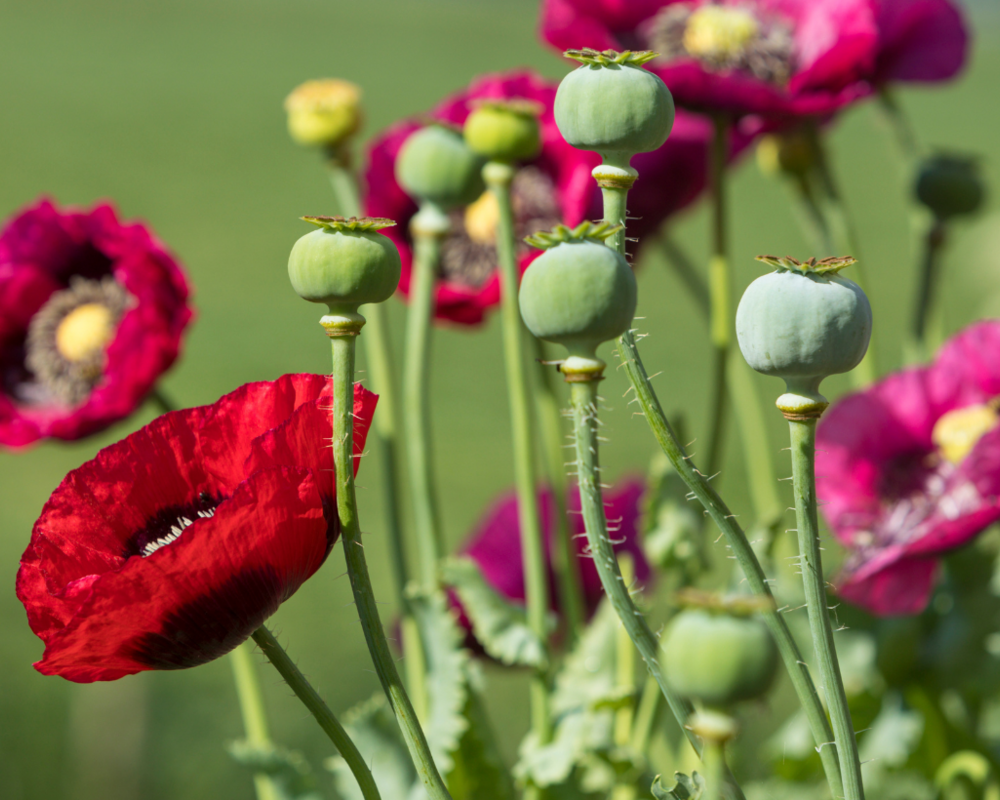
A further key plant is Papaver somniferum, the opium poppy, the source of important alkaloids such as morphine and codeine. Morphine is a potent opioid analgesic which acts on central nervous system receptors to relieve severe pain. While indispensable in modern medicine, it carries risks of respiratory depression, dependence, and overdose. Codeine, a weaker opioid, is commonly used as an antitussive and analgesic.
Tropane alkaloids represent another pharmacologically significant group. They are found in plants such as Atropa belladonna or deadly nightshade, Datura stramonium (thorn apple), and Brugmansia species (angel’s trumpet). Key compounds include atropine, hyoscyamine, and scopolamine. These substances inhibit muscarinic acetylcholine receptors and lead to anticholin-ergic effects such as pupil dilation (mydriasis), reduced glandular secretion, and smooth muscle relaxation. In medicine, at-ropine is used in ophthalmology and emergency medicine, while scopolamine is useful for motion sickness.
Jane Funke ist geborene Britin und erstellt als Native Speaker gemeinsam mit Apothekerin Hannelore Gießen seit vielen Jahren die Serie „English for PTA“, die sich mit klassischen OTC-Themen befasst.
Zertifizierte Fortbildung: Giftplanzen
Testen Sie Ihr Wissen mit der zertifizierte Fortbildung zu Giftpflanzen Die Akkreditierung ist gültig bis 27.04.2027.
Dialogue
Customer: Excuse me, I’d like some advice on dealing with plant poisoning. My twins have just started walking, and the garden worries me.
PTA: That’s understandable. Young children are at risk because the attractive parts like berries and seeds tempt them to taste, especially since they see adults eating plants.
Exactly, everything goes into their mouths. My sister once got sick from laburnum seeds, and a neighbour nearly died after mistaking death caps for edible mushrooms.
Good reminder: never assume a plant is safe just because animals eat it. Learn to recognize toxic plants and either remove them or fence them off. Teach children never to eat anything from a plant without asking an adult.
But how can I tell which plants are dangerous?
There’s no reliable rule. Bitter taste, unusual smell, milky sap, or red berries may be warning signs, but not always. If you’re unsure, avoid them. Some popular cut flowers can be surprisingly toxic in a home setting. Daffodils are a prime example, even the water in the vase. But the most frequent cases of poisoning are caused by mistaking one plant for another.
What symptoms should I watch for?
Common ones include nausea, vomiting, cramps, and diarrhoea. Severe cases may involve breathing problems, circulation issues or seizures. Some plants also cause skin reactions like redness, burning or blisters on contact.
How quickly do symptoms appear?
Don’t wait. If poisoning is sus-pected, act immediately. For skin contact, rinse thoroughly with water. If ingested, remove plant remnants from the mouth and keep them for identification. Call a poison centre or emergency services at once.
Would it be okay for them to drink milk?
Under no circumstances should milk be given! It would make it easier for the toxin to be absorbed by the body.
Should I induce vomiting?
No, that risks choking. Salt water is also unsafe nor should you apply activated charcoal without consulting an expert.
What information will doctors need?
If possible: the plant, the part eaten, how much, and when. The child’s age and weight are also important.
What exactly is a poison centre?
In Germany, regional centres offer 24/7 advice for suspected poison-ing. Save their number. There are also apps that help identify plants and connect you directly, but they don’t replace medical care.
That’s reassuring.
And remember, while most cases involve young children, serious out-comes are rare.
Thank you very much!
You’re welcome.
Vocabulary |
|
| English | Deutsch |
|---|---|
| intoxication | hier: Vergiftung |
| ingestion | Aufnahme (durch Schlucken) |
| mucosal absorption | Aufnahme über die Schleimhaut |
| exploratory | erforschend, erkundend |
| confusion | hier: Verwechselung |
| lily of the valley | Maiglöckchen |
| organ failure | Organversagen |
| visual disturbance | Sehstörung |
| golden chain | Goldregen |
| agitation | Unruhe, Erregung |
| seizure | Krampfanfall |
| opium poppy | Schlafmohn |
| deadly nightshade | Tollkirsche |
| thornapple | Stechapfel |
| glandular secretion | Drüsensekretion |
| motion sickness | Reisekrankheit |
| death cap | Knollenblätterpilz |
| sap | Pflanzensaft |
| daffodil | Narzisse, Osterglocke |
| choking | Ersticken |